
Red Fox Labrador Lifespan: How Long Do Fox Red Labs Live?
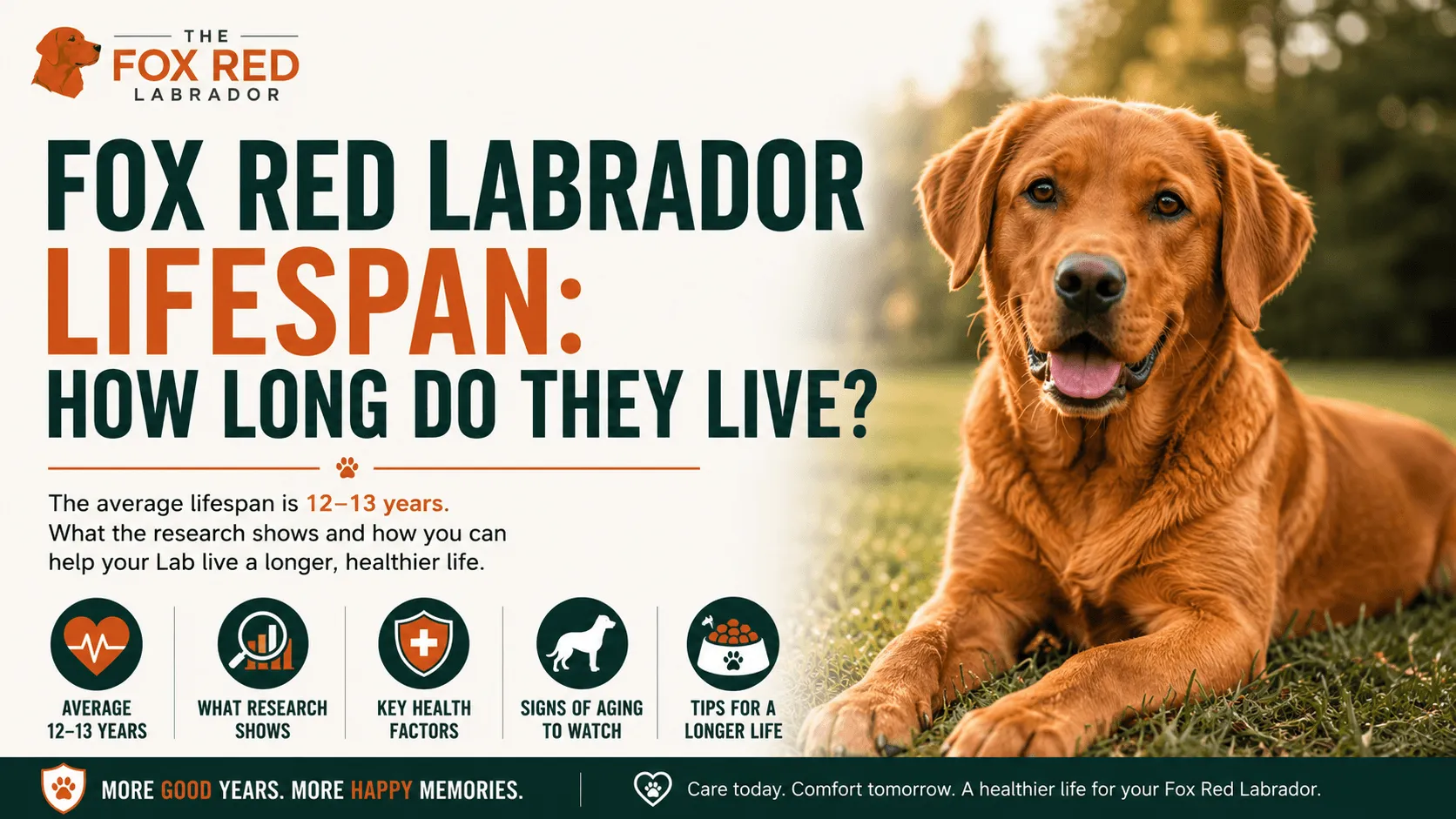
The average red labrador lifespan of a fox red Labrador is 12-13 years. Some can die younger; others can be active and comfortable until 14 or 15. Unfortunately, no life expectancy prediction can predict how long any specific dog will live.
Fox red is not a breed of Labrador, but a dark yellow color. The lifespan it is expected to have is based on research in Labrador Retrievers. There is no published work measuring fox red dogs as a separate group.
Longevity is affected by genetics, body condition, disease, breeding decisions and lifelong care. We will explore the actual research, what it does not tell us and how owners can help their Labrador in all stages of life.
Lifespan Of Red Fox Labrador At A Glance
The figures vary due to the different dog populations and calculation methods used by researchers. These numbers are helpful for planning purposes but none can estimate a specific Labrador’s age at death.
| Topic | Short answer |
|---|---|
| Practical lifespan estimate | Around 12–13 years |
| 2018 Labrador median | 12.0 years |
| 2024 Labrador median | 13.1 years |
| Fox-red-specific study | None identified |
| Common senior threshold | Around seven or eight years |
| Can one reach 15? | Yes, but it is older than the median |
| Proven coat-shade effect | None established |
| Main influences | Health, genetics, weight, care and environment |
A median is not a time limit. It is the median of a population that has been studied. Others live past it, and another dog’s life can be shortened by disease, injury or inherited issues.
Findings from the 12.0 and 13.1-year time periods should be kept distinct. The average of these would not have been reported by either study.
Sources: the 2018 UK VetCompass Labrador study and the 2024 UK companion-dog longevity study. Neither reported fox red Labradors separately.
How Long Do Fox Red Labradors Usually Live?
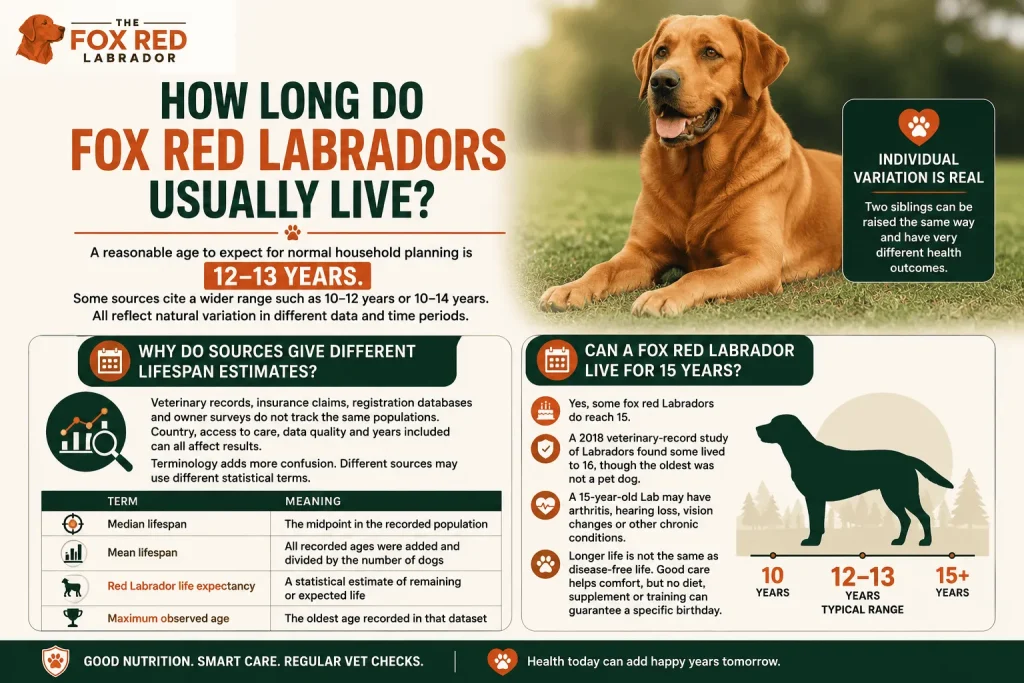
A reasonable age to expect for normal household planning is 12–13 years. Sometimes the general breed profile is given in a wider range of years, e.g., 10- 12 years or 10-14 years. All those estimates can be used to describe Labrador reasonably because they are from different sources and periods.
There is some variation in individual responses. Two siblings can be raised exactly the same and end up with completely different health records. Two dogs can be raised in exactly the same way and have entirely different health stories. One may continue to be active until the teen years, while the other may develop cancer, joint disease or some other unrelated illness earlier.
Why Do Sources Give Different Lifespan Estimates?
Veterinary records, insurance claims, registration databases and owner surveys do not provide the same populations. The result can be affected by country, access to veterinary care, data quality and the years included.
More confusion arises from the use of terminology. Sometimes the term “average lifespan” is used when a source gives a median or a life-table estimate.
| Term | Meaning |
|---|---|
| Median lifespan | The midpoint in the recorded population |
| Mean lifespan | All recorded ages were added and divided by the number of dogs |
| Red Labrador Life Expectancy | A statistical estimate of remaining or expected life |
| Maximum observed age | The oldest age recorded in that dataset |
Can A Fox Red Labrador Live For 15 Years?
Yes, there are some fox red Labradors that can get to 15. This is past the central age estimate but is still biologically possible. The 2018 veterinary-record study was conducted on Labradors that lived to 16, but the oldest dog observed was not the family dog.
Additionally, a 15-year-old Lab can suffer from arthritis, hearing loss, loss of vision or other chronic conditions. Life span is not synonymous with disease-free life. While all good care can help to maintain comfort, there is no diet, supplement or training regimen that guarantees a specific birthday.
What Does Labrador Lifespan Research Show?

More than personal anecdotes should be relied upon for reliable estimates of lifespan. Population patterns can be illustrated by peer-reviewed studies and large datasets, and official breed organisations can give an insight into health-screening practices.
Personal accounts are still useful. They demonstrate the appearance of aging in actual residences. But an owner’s 15-year-old Labrador can’t set the average for thousands of Labradors.
A useful evidence order is:
- Peer-reviewed breed research
- Large veterinary or registration datasets
- Official breed-health guidance
- Qualified clinical observation
- Individual owner stories
There are different types of questions answered at each level. Population research provides an estimation of patterns, while clinical experience helps to translate patterns into day-to-day care.
What Did The 2018 Labrador Study Find?
The 2018 VetCompass study examined demographic data for 33,320 Labrador Retrievers that were attending UK primary veterinary care in 2013. The researchers used a random sample of 2,074 dogs for research to gather information on disorders and mortality. From the clinical records, they were able to record 176 deaths.
| 2018 study measure | Finding |
|---|---|
| Labradors in the demographic population | 33,320 |
| Records reviewed for disorder and mortality data | 2,074 |
| Recorded deaths | 176 |
| Overall median longevity | 12.0 years |
| Middle 50% of recorded ages at death | 9.9–13.8 years |
The interquartile range is the middle 50% of the data. It demonstrates the age range at death that was recorded in the middle 50% of dogs without suggesting that all dogs should die within that age range.
The median life span for non-chocolate Labradors was 12.1 years. The median age of the chocolate dogs was 10.7 years. Fox Red Labradors were not classified as a separate breed, but were placed in the yellow category.
These were clinical records and not a study of all dogs in the demographic population throughout their lifetime. The findings should be accompanied by geographic and record-based restrictions.
What Did The 2024 Longevity Dataset Find?
In a 2024 study published in Scientific Reports, researchers looked at longevity in hundreds of thousands of dogs in the UK from various sources. The breed table that accompanied this report showed 43,428 Labradors with a median life expectancy of 13.1 years.
The bigger, newer dataset does not invalidate the earlier estimate. The two studies differed in design, source population and calculation. As a group, they tend to predict an average age of about 12–13 years, but they don’t make a precise prediction for one specific dog.
Pale yellow Labradors were not differentiated from fox red ones in the breed table. It would thus be an overstatement to apply 13.1 only to fox red dogs.
What Does Median Lifespan Mean For One Dog?
The median is the middle value in the set of data. This does not start a countdown at 12 years of age for a Labrador.
Dogs might be comfortable and active beyond the median. Others suffer from severe illness at an early age even with careful care. Both of these affects the meaning of the population statistic.
To give an older dog better guidance, the current function is more appropriate. Appetite, breathing, mobility, comfort and interest in normal activities tell us much more than one number.
Veterinary Perspective
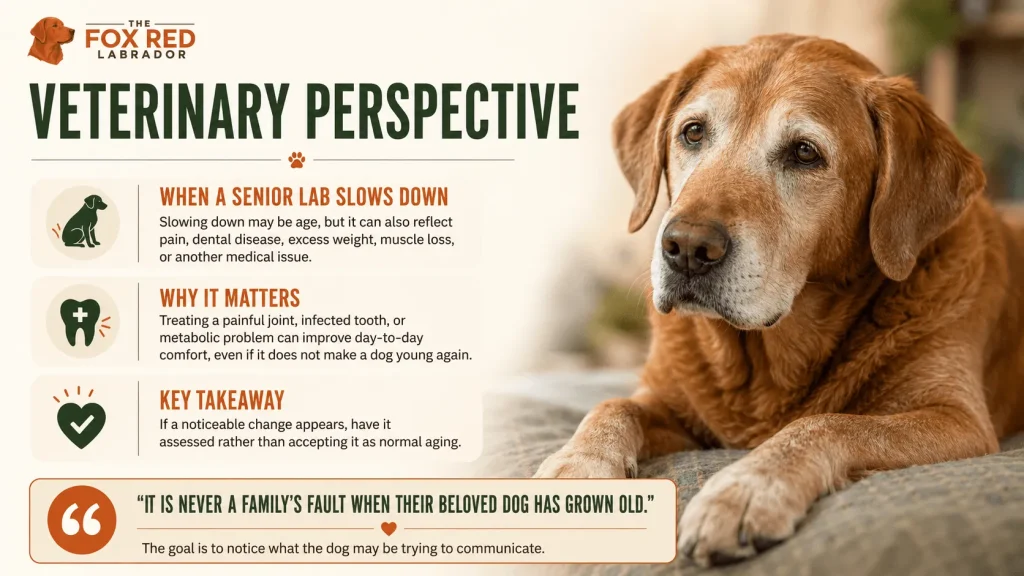
The older Labrador is frequently adopted because the family thinks that the dog is “slowing down.” Sometimes it’s age, but often it’s pain, dental disease, excess weight, muscle loss or some other medical issue.
That distinction matters. Even if it can’t make a dog young again, treating a painful joint, infected tooth or metabolic condition can make a difference in the dog’s day-to-day life. If there is a change that is noticeable, it should be assessed, not accepted.
“It is never a family’s fault when their beloved dog has grown old.” The aim is just to pay attention to what the dog may be trying to silently communicate to us.
Is Fox Red A Separate Type of Labrador?
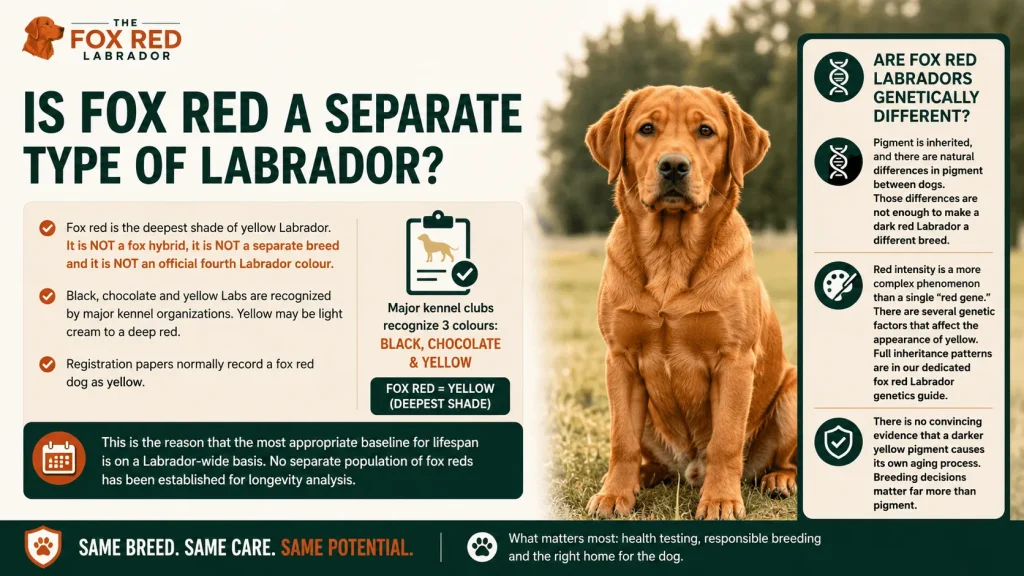
Fox red is the deepest shade of yellow Labrador. It is not a fox hybrid, not a separate breed and it is not an official fourth Labrador colour.
Black, chocolate and yellow Labs are recognized by major kennel organizations. Yellow may be light cream to a deep red. Registration papers normally record a fox red dog as yellow. For a fuller explanation of how fox red fits within the recognized yellow Labrador range, read our Fox Red Lab vs Yellow Lab comparison.
This is the reason that the most appropriate baseline for lifespan is on a Labrador-wide basis. No separate population of foxes has been established for longevity analysis.
Are Fox Red Labradors Genetically Different?
Pigment is inherited, and there are natural differences in pigment between dogs. Those differences are not enough to make a dark red Labrador a different breed.
Red intensity is a more complex phenomenon than a single “red gene.” There are several genetic factors that affect the appearance of the yellow. Full inheritance patterns are not for an article about lifespan, but for a dedicated fox red Labrador genetics guide.
There is no convincing evidence that a darker yellow pigment will cause its own aging process. It is important to pay more attention to breeding decisions than to the pigment.
Does Coat Color Affect Fox Red Labrador Lifespan?
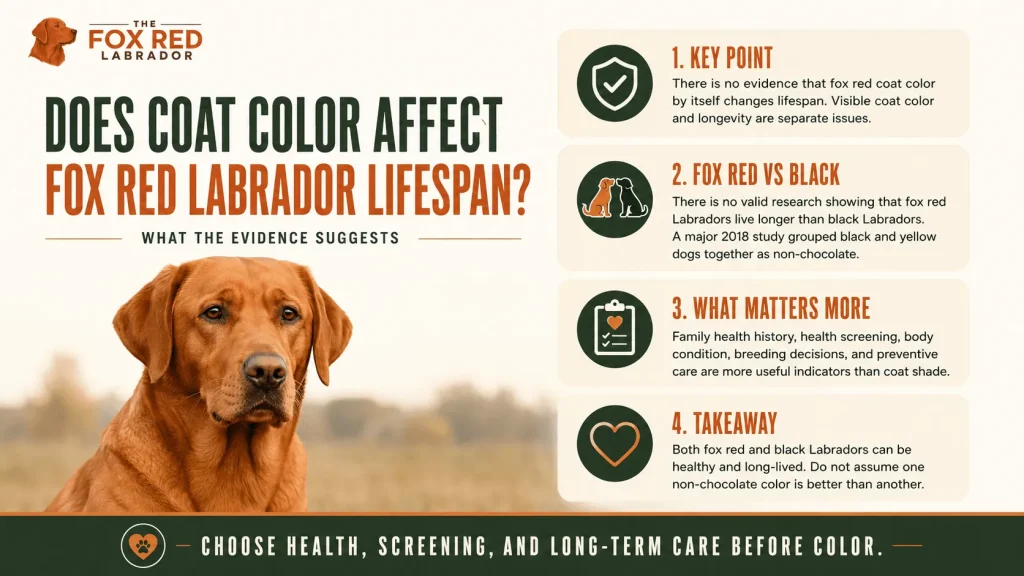
The findings of coat color are extrapolated to the study’s limits. A correlation has been found with chocolate Labradors; however, a lifespan ranking has not been made for each of the known chocolate colours or yellow shades.
A coat visible to the naked eye and breeding decisions are separate issues. There is no evidence of a longevity effect for pigment alone in fox-red.
Do Fox Red Labradors Live Longer Than Black Labradors?
There is no valid research to show that fox red Labradors live longer than black Labradors. The 2018 research combined black and yellow dogs into a non-chocolate category for its main color comparison.
That data can’t be later separated to show an advantage for red over black. Both colors can give rise to healthy, long-lived dogs as well as serious disease.
There is more useful information to be gained from family health history, screening results and body condition rather than assuming that one non-chocolate color is better than another.
Do Fox Red Labradors Live Longer Than Chocolate Labradors?
The 2018 study revealed a median life of 12.1 years for dogs that didn’t eat chocolate and 10.7 years for chocolate Labradors. Fox red was not measured separately, but was included in the non-chocolate population.
That correlation doesn’t prove that red pigment is beneficial to health or that chocolate pigment is directly responsible for the shortening of life. Possible explanations were discussed, including the health burden and restricted breeding populations, but an observational study cannot rule out any one cause.
A chocolate Labrador will not be a poor health dog. Population findings are not a prediction of each puppy’s future.
Can Breeding For A Darker Coat Affect Health?
Multiple selection from a limited number of dogs may limit breeding options. When there is more focus on coat depth than on orthopedic health, eye exams or temperament and family history, there is increased risk.
The production of fox red puppies is not in itself irresponsible. The careful breeder can appreciate the shade without sacrificing wide-ranging health goals.
| Color-first selection | Health-first selection |
|---|---|
| Chooses breeding dogs mainly for coat depth | Considers health, temperament, structure and pedigree |
| Uses vague “vet checked” claims | Provides original screening results |
| Promises rare color or guaranteed shade | Explains natural shade variation |
| Gives little information about older relatives | Discusses family health where records exist |
Buyers should ask for documents rather than rely on attractive phrases.
Do Male and Female Fox Red Labradors Have Different Lifespans?
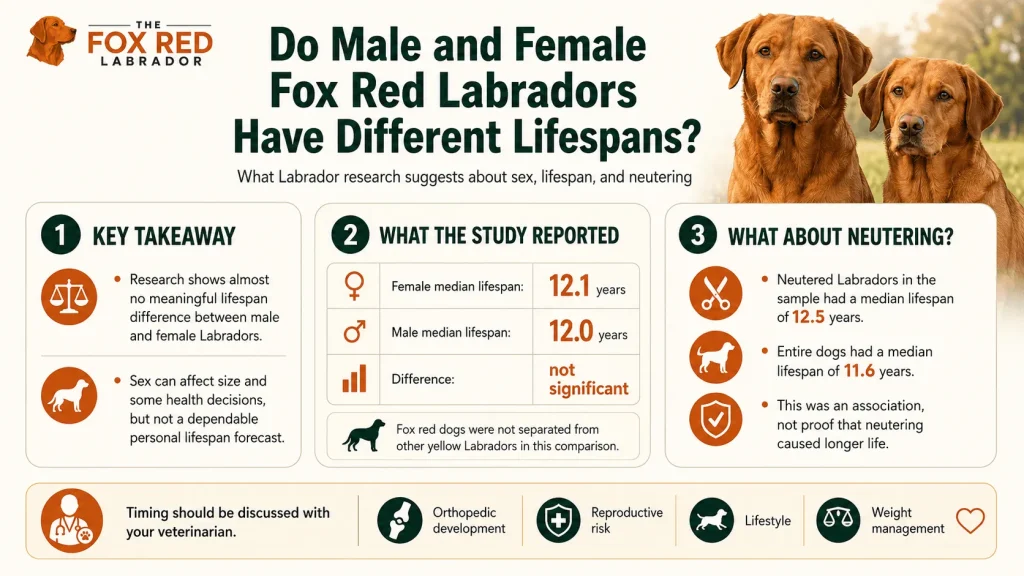
When owners compare the male vs female red Lab lifespan, the available Labrador research shows almost no meaningful difference between the sexes. Sex influences body size, reproductive health and some medical decisions. It does not offer a dependable personal lifespan forecast.
A female does not necessarily mean an extra year and a male does not necessarily mean a shorter lifespan. The figures for Labrador are very close.
What Did The Labrador Study Report About Sex?
In the 2018 study, the median lifespan for female Labradors was 12.1 years. The median age for males was 12.0 years.
This difference was not significant. The probability of death was also not different between males and females for the ten most common causes of death. For this comparison, no separation of the fox red dogs from other yellow Labradors was made.
Sex might still be a factor in personal healthcare. It is not sufficient to make a meaningful prediction of a fox red lab lifespan.
Does Neutering Affect A Fox Red Lab Lifespan?
The median length of life of neutered Labradors in the 2018 sample was 12.5 years, while it was 11.6 years for entire dogs. That was an association, not proof that surgery gave 0.9 years.
The outcome may be influenced by age, access to health care, owner management, disease history and the reason for neutering. The research also revealed a link between neutering and overweight/obesity in males, highlighting the importance of not making a decision based on one positive number.
The timing needs to be discussed with the dog’s veterinarian. Sex, orthopedic development, reproductive risk and lifestyle are all part of that conversation.
Do Working And Show-Line Fox Red Labradors Live Different Lengths?
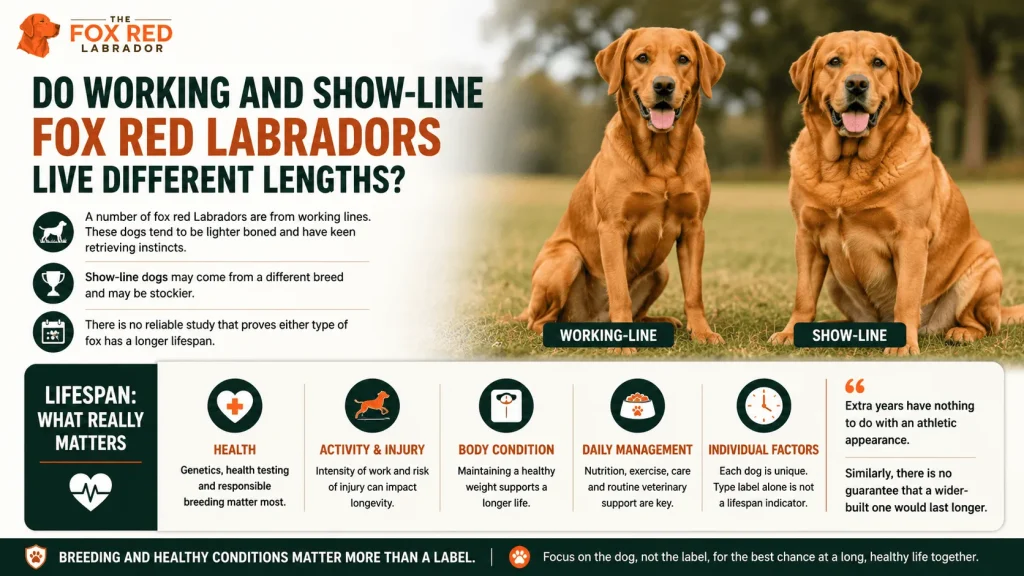
A number of fox red Labradors are from working lines. These dogs tend to be lighter boned and have keen retrieving instincts. Show-line dogs may come from a different breed and may be stockier.
There is no reliable study that proves either type of fox has a longer lifespan. The intensity of work, the incidence of injury, body condition, health and the daily management of an individual can affect his or her lifespan, but the label alone is not an indicator.
Extra years have nothing to do with an athletic appearance. Similarly, there is no guarantee that a wider-built one would last longer. Breeding and healthy conditions are more important than selecting a type for lifespan assumptions.
What Factors Affect A Red Labrador’s Lifespan?
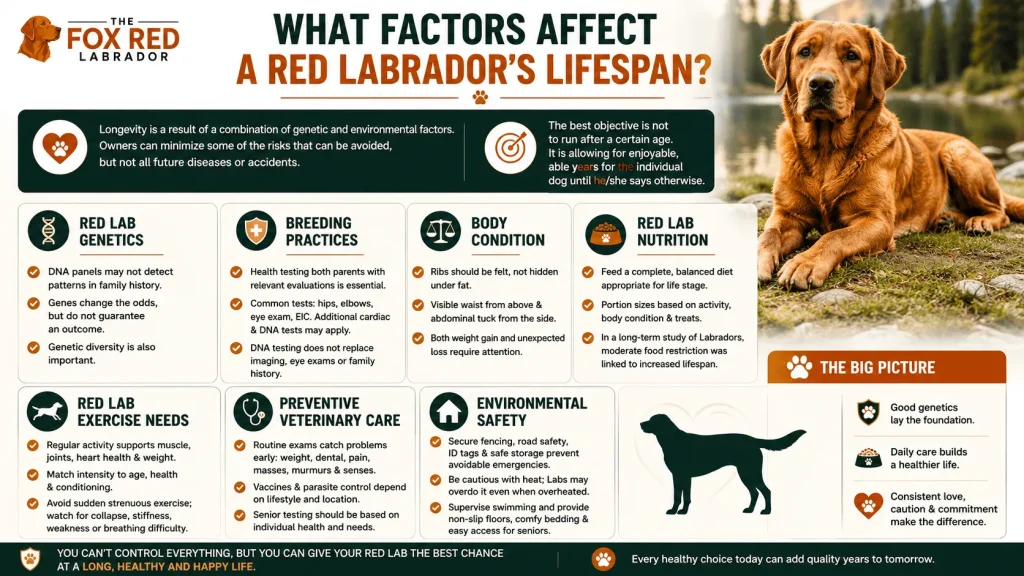
Longevity is a result of a combination of genetic and environmental factors. Owners can minimize some of the risks that can be avoided, but not all future diseases or accidents.
The best objective is not to run after a certain age. It is allowing for enjoyable, able years for the individual dog until he/she says otherwise.
Red Lab Genetics
A DNA panel may not be able to detect patterns in family history. If records exist, ask about joint disease, eye problems, collapse, cancer and ages and causes of death of older relatives.
Genes change the odds of an outcome, but do not guarantee it. A dog that has an inherited risk can never develop the associated condition and a dog with reassuring parents can still become ill.
However, genetic diversity is also important. A few popular breeders can pass on bad blood in a line.
Breeding Practices
Responsible breeding involves more than two healthy looking dogs. The assessments of both parents should be relevant and the buyer should have access to the original assessments.
Hips, elbows, an ophthalmologist’s eye exam and EIC testing are common tests performed on a Labrador. Additional cardiac and DNA testing may be applicable based on geographic area and breeding program. The Labrador Retriever Club has its own up-to-date clearance recommendations, and other countries have their own recommendations.
DNA testing does not imply that all health areas have been evaluated. Genetic screening is not a substitute for joint imaging, eye examination or a well documented family history.
Body Condition
One of the most helpful at-home health indicators is body condition. The ribs should be palpable and not covered by a thick layer of fat. A waist should be visible from above, and an abdominal tuck from the side.
There are no universal standards for the ideal weight of a Labrador. The scale is affected by sex, height, bone structure and muscle. Shape and body condition score are more reliable indicators of a healthy weight for a fox red Labrador.
Unexpected loss must be addressed as well. As dogs get older, they may lose weight or muscle mass due to dental pain, organ disease, cancer and other conditions.
Red Lab Nutrition
Select a nutritionally complete and balanced food appropriate for the dog’s life stage. Large breed puppies do not require the maximum amount of food that they can convince someone to feed, but rather controlled growth.
Adult sizes should be proportional to activity, body condition and treats. Even though the Labrador knows that snacks get swallowed before they get to the stomach, they still have calories in them. Our Fox Red Labrador feeding guide explains how portions, treats, activity, life stage and body condition should shape a Labrador’s diet.
Health is the key determinant of senior needs. Some dogs need fewer calories and some dogs will need a modified diet for diagnosed kidney, gastrointestinal or other diseases.
In an experiment in which pairs of Labradors were fed the same amount, the restricted feeding group lived longer. It helps to prevent chronic overfeeding and to not use a single feeding reduction per household.
Red Lab Exercise Needs
Regular activity helps maintain muscle and joint function, cardiovascular fitness and healthy body condition. Any of the above can help, as well as walking, retrieving, swimming, scent work and short training sessions. See our Fox Red Labrador exercise guide for age-appropriate activity, conditioning, mental stimulation and recovery guidance.
The intensity should be appropriate to the age, health and conditioning of the individual. Puppies are not little Cal Peaks and older dogs may need shorter, more frequent walks.
An unconditioned dog can be injured by sudden strenuous exercise. If hard activity is to be resumed, collapse, marked stiffness, severe weakness or breathing difficulty should be assessed.
Preventive Veterinary Care
Weight changes, dental disease, pain, new masses, heart murmurs and changes in senses can be detected through routine exams before they become a serious disruption of daily life. Regular hands-on care can also help owners notice skin, ear, nail or coat changes early, as explained in our Fox Red Labrador grooming guide.
Vaccination and parasite control should be based on location, travel, wildlife exposure and lifestyle. The risks for a working dog that swims and spends a lot of time in the fields will be different than the risks for a mostly indoor suburban dog.
The health, medicines and examination results of the individual dog should be the basis for senior testing. There is no single blood-testing schedule that works for all Labs.
Environmental Safety
The ordinary hazards can kill as effectively as disease. Avoidable emergencies are prevented by secure fencing, road safety, reliable identification and safe storage of medicines or toxic foods.
Caring for heat is special. Labradors may be able to continue retrieving when they are no longer in good judgment, so owners should exercise caution with temperature, humidity and conditioning.
Swimming must be supervised. Other advantages for older dogs include non-slip flooring, supportive bedding and more convenient access to favorite resting spots.
What Health Problems May Affect Fox Red Lab Longevity?
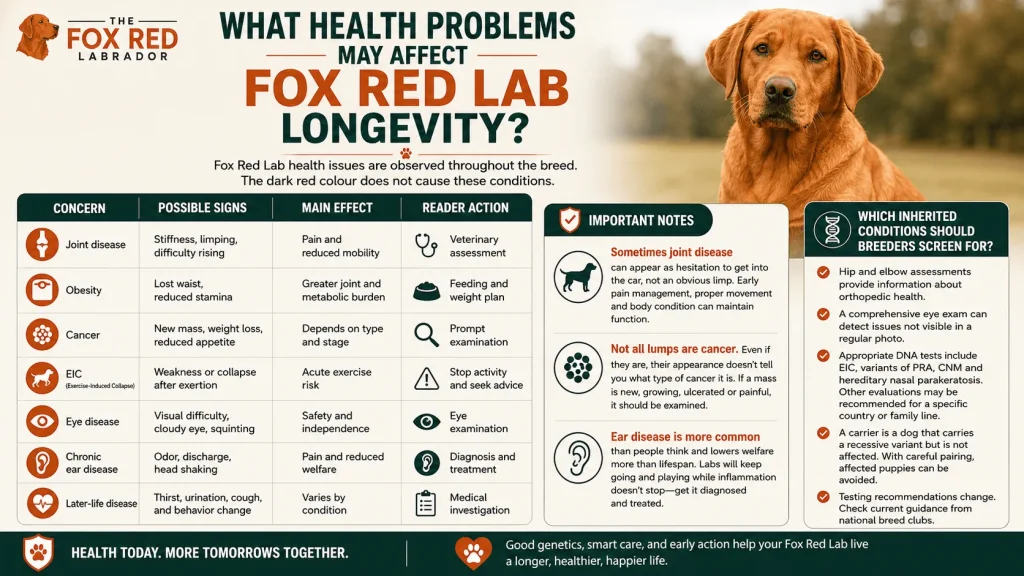
Fox Red Lab health issues are observed throughout the breed. The dark red colour does not cause these conditions.
There are some that have a direct impact on survival. Others mostly impact mobility, comfort or independence and may be important in later life care.
| Concern | Possible signs | Main effect | Reader action |
|---|---|---|---|
| Joint disease | Stiffness, limping, difficulty rising | Pain and reduced mobility | Veterinary assessment |
| Obesity | Lost waist, reduced stamina | Greater joint and metabolic burden | Feeding and weight plan |
| Cancer | New mass, weight loss, reduced appetite | Depends on type and stage | Prompt examination |
| EIC | Weakness or collapse after exertion | Acute exercise risk | Stop activity and seek advice |
| Eye disease | Visual difficulty, cloudy eye, squinting | Safety and independence | Eye examination |
| Chronic ear disease | Odor, discharge, head shaking | Pain and reduced welfare | Diagnosis and treatment |
| Later-life disease | Thirst, urination, cough, and behavior change | Varies by condition | Medical investigation |
Sometimes joint disease can be seen as hesitation to get into the car, not as an obvious limp. Early pain management and proper movement and body condition can maintain function.
Not all lumps are cancerous, and even if they are, their appearance doesn’t tell you what type of cancer they are. If the mass is new, enlarging, or ulcerated or if it is uncomfortable, it should be examined.
Ear disease is more prevalent in working dogs than in lifespan. The dog may be playing nice, but the inflammation doesn’t stop and needs to be treated. Labradors are very dedicated to continuing to go.
Which Inherited Conditions Should Breeders Screen For?
The hip and elbow assessments give information regarding orthopedic health. A comprehensive eye exam can detect issues that aren’t apparent in a regular photo.
Appropriate DNA tests include EIC, variants of progressive retinal atrophy, centronuclear myopathy and hereditary nasal parakeratosis. Other evaluations may be recommended for a particular country or family line.
A carrier is a dog that carries a recessive variant but is not affected. Sometimes carriers can be bred without affected puppies appearing in the litter, provided the mate is known as well.
Testing recommendations change. A buyer should check a breeder’s papers against the up-to-date information provided by national breed clubs, not take it for granted that all the panels available in any one commercial source are required.
What Do Labradors Commonly Die From?
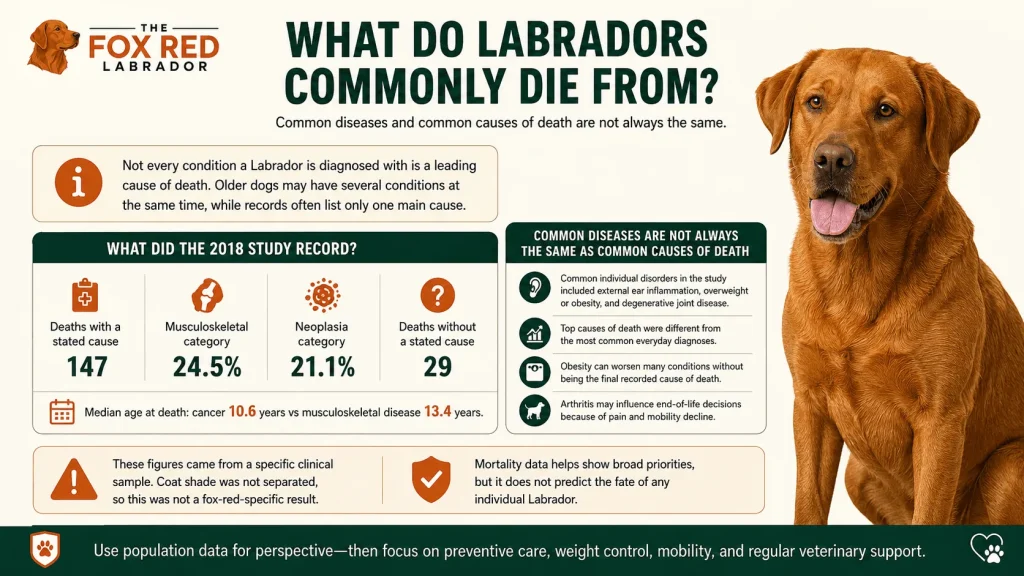
Not all conditions diagnosed are necessarily leading causes of death. Labradors, for instance, often suffer from ear disease and this isn’t cancer, but it does have a mortality significance.
Veterinary records also handle end-of-life scenarios in a simplified way. An older dog can suffer from arthritis, kidney disease and cognitive decline simultaneously, and the record is merely listing one main cause.
What Did the 2018 Study Record?
Of the 176 Labrador deaths recorded, 147 had a stated cause. The most common grouped category was musculoskeletal disorders, followed by disorders of neoplasia (cancerous growth).
| Recorded mortality measure | 2018 finding |
|---|---|
| Deaths with a stated cause | 147 |
| Musculoskeletal category | 24.5% |
| Neoplasia category | 21.1% |
| Deaths without a stated cause | 29 |
In that data set, the median age at death for cancer was younger than for musculoskeletal disease, 10.6 years versus 13.4 years.
The percentages are not a reflection of the fact that 24.5% of all fox red Labradors suffer from joint disease. The categories refer to a specific clinical sample and coat shade was not separated.
Are Common Diseases The Same As Common Causes Of Death?
No. The most common individual disorders in the 2018 study were external ear inflammation, overweight/obesity and degenerative joint disease. The top causes of death were different.
Obesity can exacerbate multiple conditions, but not the actual cause of death. Although not directly life-threatening, arthritis can influence a humane end-of-life choice due to pain and mobility issues.
Mortality data is affected by coding practices, availability of records, and welfare decisions. The figures are helpful in determining priorities, but not forecasting the fate of any one Labrador.
Red Labrador Lifespan By Age
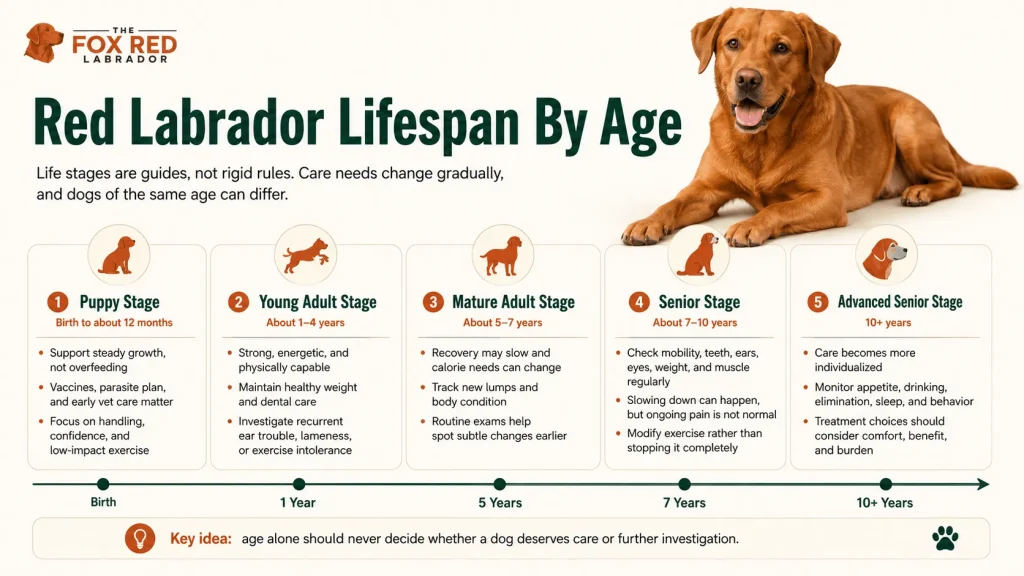
Labradors do not move into a new life stage overnight. The ranges below offer practical care markers rather than fixed biological boundaries.
A healthy eight-year-old may still race toward a tennis ball with puppy-level confidence. Another dog of the same age may already need support for a chronic disease.
Puppy Stage
Nutrition should encourage slow growth in large breeds during early life (birth to about 12 months). Too many calories don’t make a bigger dog and can put undue pressure on growing joints.
Avoid unnecessary risks through vaccination, parasite planning and early veterinary treatment. Exercise should involve coordination and confidence, not endurance or repetitive high impact exercise.
Ear, foot, mouth, and body handling will reduce stress for future exams. Early records also provide a good reference for the growth and development of fox red Labradors.
Young Adult Stage
A fox red Lab will be physically capable and typically ready to show it between 1 and 4 years of age. Gradually condition to match enthusiasm to safer movement.
Keep the waist exposed and set up routine dental visits. Any recurrent ear trouble, lameness, exercise intolerance or collapse should be investigated.
Mental activity without every outing being a marathon: Training and scent work. Our Fox Red Labrador training guide covers recall, lead manners, impulse control, calm behavior and mentally rewarding exercises.
Mature Adult Stage
Changes may be more subtle around 5-7 years. Recovery may be slow, and calorie requirements can change, with early muscle loss becoming apparent.
Make new notes on lumps, including where, how large and when they were observed. Re-evaluate the amount of food rather than simply thinking that the same amount of food will be right for the dog for life.
The more baseline examination findings, the more helpful. It’s easier to see later changes if the veterinarian has something to compare.
Senior Stage
Many Labradors fall into the senior care category at about seven or eight and remain in that category until about ten. The label should be a warning sign rather than a death sentence.
The health of mobility, teeth, ears, eyes, weight and muscles should be checked regularly. While slowing down can be a part of getting older, constant pain is not something that a dog should have to live with.
Often exercise needs to be modified, not eliminated. If selected for the individual, short walks, controlled swimming and gentle strengthening can help to maintain function.
Advanced Senior Stage
Care becomes more personal after 10. Medicines, activity levels and support needs for two Labradors of the same age can be very different.
Monitor feeding, drinking, elimination, respirations, sleep and social interest. Any change in awareness or behavior at night can be a sign of pain, memory loss or other medical issues.
Comfort, expected benefit and burden should be taken into consideration when selecting treatment. A dog’s age should never be the sole basis for determining whether or not they need investigation or care.
When Is A Fox Red Labrador Considered Old?
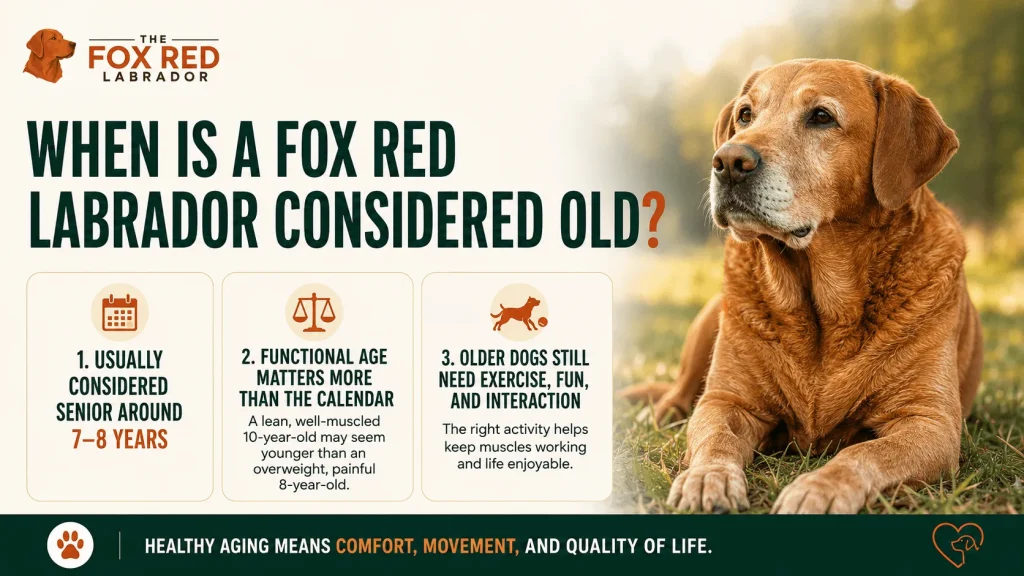
Generally, a fox red lab is considered a senior at 7 or 8 years old. A dog’s senior years don’t indicate that he or she is dying.
The calendar may not tell the whole story about functional age. A thin, well-muscled 10-year-old can look younger than an overweight, painful 8-year-old.
Even older dogs require exercise, fun and interaction. The right activity helps to keep muscles warm and keeps life interesting.
What Are The First Signs Of Aging In A Red Labrador?
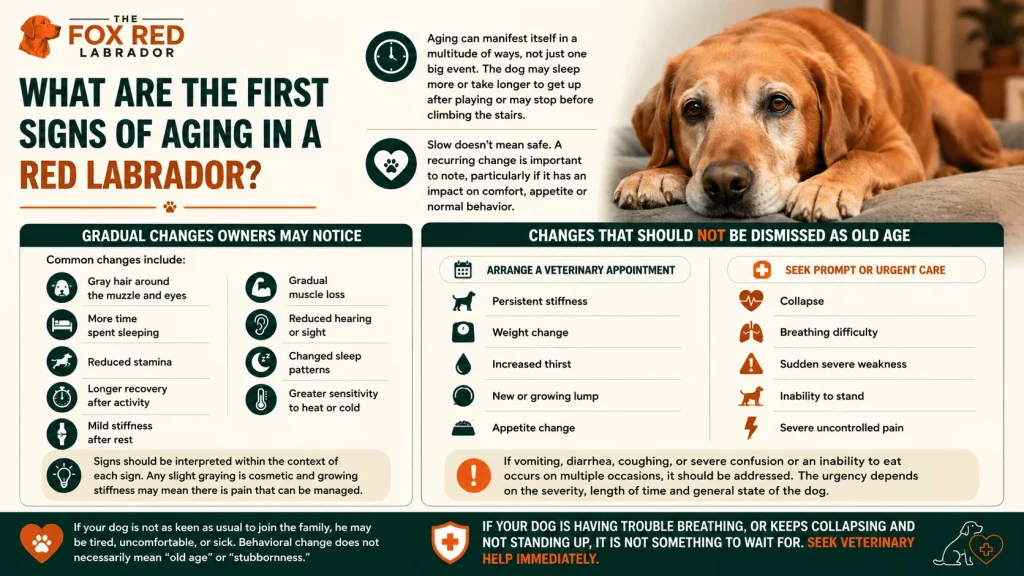
Aging can manifest itself in a multitude of ways, not just one big event. The dog may sleep more or take longer to get up after playing or may stop before climbing the stairs. Coat density and hair loss may also change with season, health and age, so use our Fox Red Labrador shedding guide to understand normal shedding patterns and changes worth discussing with a veterinarian.
Slow doesn’t mean safe. A recurring change is important to note, particularly if it has an impact on comfort, appetite or normal behavior.
Gradual Changes Owners May Notice
Common changes include:
- Gray hair around the muzzle and eyes
- More time spent sleeping
- Reduced stamina
- Longer recovery after activity
- Mild stiffness after rest
- Gradual muscle loss
- Reduced hearing or sight
- Changed sleep patterns
- Greater sensitivity to heat or cold
Signs should be interpreted within the context of each sign. Any slight graying is cosmetic and growing stiffness may mean there is pain that can be managed.
If your dog is not as keen as usual to join the family, he may be tired, uncomfortable, or sick. Behavioral change does not necessarily mean “old age” or “stubbornness.
Changes That Should Not Be Dismissed As Old Age
Some signs justify an appointment, while others may require prompt care.
| Arrange a veterinary appointment | Seek prompt or urgent care |
|---|---|
| Persistent stiffness | Collapse |
| Weight change | Breathing difficulty |
| Increased thirst | Sudden severe weakness |
| New or growing lump | Inability to stand |
| Appetite change | Severe uncontrolled pain |
If vomiting, diarrhea, coughing, or severe confusion or an inability to eat occurs on multiple occasions, it should be addressed. The urgency depends on the severity, length of time and general state of the dog.
If your child is having trouble breathing, or if they keep collapsing and not standing up, it is not something that should be put off until their next check-up. Seek veterinary help immediately.
How Should Quality Of Life Be Monitored?
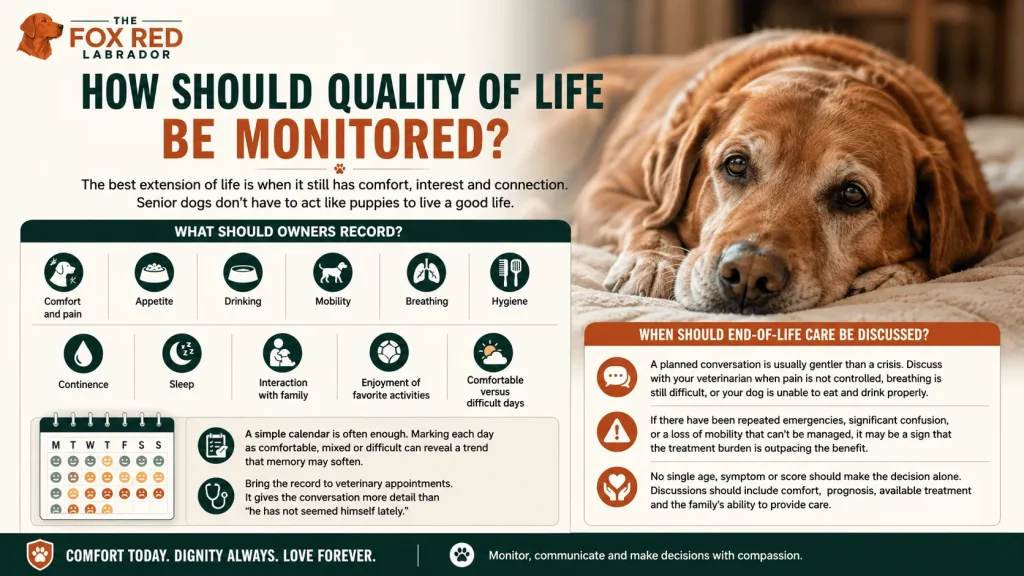
The best extension of life is when it still has comfort, interest and connection. Senior dogs don’t have to act like puppies to live a good life.
Don’t despair at one challenging morning, but see patterns. Slow change is easier to see and talk about when it’s in writing.
What Should Owners Record?
Monitor:
- Comfort and pain
- Appetite
- Drinking
- Mobility
- Breathing
- Hygiene
- Continence
- Sleep
- Interaction with family
- Enjoyment of favorite activities
- Comfortable versus difficult days
A simple calendar is often enough. Marking each day as comfortable, mixed or difficult can reveal a trend that memory may soften.
Bring the record to veterinary appointments. It gives the conversation more detail than “he has not seemed himself lately.”
When Should End-Of-Life Care Be Discussed?
A planned conversation is usually gentler than a crisis. Discuss with your veterinarian when pain is not controlled, when breathing is still difficult, or when your dog is unable to eat and drink properly.
If there have been repeated emergencies, there is a significant amount of confusion and a loss of mobility that cannot be managed, it may be a sign that the treatment burden is outpacing the benefit. When there’s a trend of challenging days, it’s time for a serious look.
No single age, symptom or score should make the decision alone. Discussions should include comfort, prognosis, available treatment and the family’s ability to provide care. Read complete care guide.
How Can I Help My Red Labrador Stay Healthy?
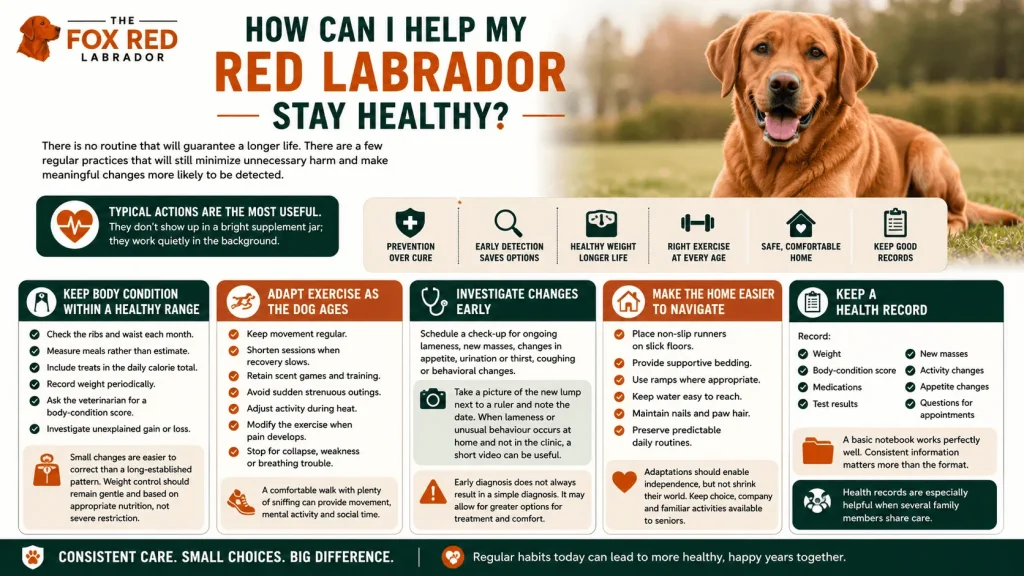
There is no routine that will guarantee a longer life. There are a few regular practices that will still minimize unnecessary harm and make meaningful changes more likely to be detected.
Typical actions are the most useful. They don’t show up in a bright supplement jar; they work quietly in the background.
Keep Body Condition Within A Healthy Range
- Check the ribs and waist each month.
- Measure meals rather than estimate.
- Include treats in the daily calorie total.
- Record weight periodically.
- Ask the veterinarian for a body-condition score.
- Investigate unexplained gain or loss.
Small changes are easier to correct than a long-established pattern. Weight control should remain gentle and based on appropriate nutrition, not severe restriction.
Adapt Exercise As The Dog Ages
- Keep movement regular.
- Shorten sessions when recovery slows.
- Retain scent games and training.
- Avoid sudden strenuous outings.
- Adjust activity during heat.
- Modify the exercise when pain develops.
- Stop for collapse, weakness or breathing trouble.
An older dog may no longer need a long run to have a satisfying day. A comfortable walk with plenty of sniffing can provide movement, mental activity and social time.
Investigate Changes Early
Schedule a check-up for ongoing lameness, new masses, changes in appetite, urination or thirst, coughing or behavioral changes.
Take a picture of the new lump next to a ruler and note the date. When lameness or unusual behaviour occurs at home and not in the clinic, a short video can be useful.
Early diagnosis does not always result in a simple diagnosis. It may allow for greater options for treatment and comfort.
Make the Home Easier to Navigate
- Place non-slip runners on slick floors.
- Provide supportive bedding.
- Use ramps where appropriate.
- Keep water easy to reach.
- Maintain nails and paw hair.
- Preserve predictable daily routines.
Adaptations should be designed to enable the dog to be independent, but not to make its world too small. The choice, company, and familiar activities are still available to seniors.
Keep A Health Record
Record:
- Weight
- Body-condition score
- Medications
- Test results
- New masses
- Activity changes
- Appetite changes
- Questions for appointments
A basic notebook works perfectly well. Consistent information matters more than the format.
Health records are especially helpful when several family members share care. Everyone can see what changed, when it began and whether the pattern is improving.
Conclusion
The average life span of a fox red Labrador is approximately 12 to 13 years, but some may live longer or shorter. There is no referenced lifetime for the red shade.
Good care is about the years within the number. A senior can maintain his or her comfort and ease of movement, along with proper medical attention and early recognition of changes, and continue to do the things that are familiar.
Don’t assume that age is the only reason for your Labrador to be slowing down, losing weight, developing a new lump or acting differently; make an appointment with the vet. Sometimes, even if a condition is not curable, knowing about it can help to provide more compassionate and effective treatment.
FAQ’s
Red Labradors commonly live for about 12–13 years. Some dogs die younger because of disease or unexpected events, while long-lived individuals may reach 14 or 15.
A practical expectation is approximately 12–13 years. A 2018 UK Labrador study reported a 12.0-year median, while a larger 2024 dataset reported 13.1 years.
Fox red belongs within yellow, so the general Labrador lifespan estimate applies. Inherited health, body condition and disease are more useful considerations than coat depth.
Current research does not support a red-over-black lifespan advantage. The principal coat-color study combined yellow and black dogs into one non-chocolate group.
Fox red Labradors can be healthy, but they share breed risks such as obesity, joint disease, eye disorders and EIC. Responsible breeding and appropriate care remain necessary.
No unique fox-red disease burden has been established. Concern arises when dark coloring is prioritized over health screening, temperament and genetic diversity.
Many Labradors are considered senior from around seven or eight years. Senior status is a care category, not a prediction that the dog is close to death.
Yes, some red Labradors reach 15. That age is beyond the population median, and no diet, supplement or care routine can guarantee it.
No dependable fox-red-specific longevity registry was identified. Owner reports may describe very old dogs, but they should not be presented as records without documentation.
Maintain a healthy body condition, provide age-suitable exercise, use preventive veterinary care and investigate meaningful changes early. These measures support health without promising a particular lifespan.
A gray muzzle, more sleep, lower stamina and stiffness may develop gradually. Sudden weakness, collapse, breathing trouble or rapid weight change should not be accepted as ordinary aging..
References
- McGreevy PD, Wilson BJ, Mansfield CS, et al. (2018). Labrador Retrievers under primary veterinary care in the UK: demography, mortality and disorders. Supports the 12.0-year median, sex and neuter findings, coat-color comparison, common disorders and mortality categories.
- McMillan KM, Bielby J, Williams CL, et al. (2024). Longevity of companion dog breeds: those at risk from early death. Supports the newer Labrador median life-expectancy estimate.
- Dogs Trust (2024). Life expectancy for 155 breeds and crossbreeds. Provides the breed-table entry for 43,428 Labrador Retrievers and the 13.1-year estimate.
- Adams VJ, Watson P, Carmichael S, et al. (2018). Evidence of longer life: a cohort of 39 Labrador Retrievers. Describes a selected cohort of long-lived Labradors and factors associated with successful aging.
- Kealy RD, Lawler DF, Ballam JM, et al. (2002). Effects of diet restriction on life span and age-related changes in dogs. Supports the association between controlled feeding, leaner body condition and longevity in paired Labradors.
- The Labrador Retriever Club, Inc. Recommended Health Clearances for the Labrador Retriever. Supports current US guidance on hips, elbows, eye examinations, EIC and related screening.
- The Labrador Retriever Club, Inc. Labrador Breed Standard. Provides recognized breed characteristics and official Labrador classification.