Red Fox Labrador Rescue: Where to Find and Adopt a Fox Red Lab
Labradors are sometimes found in fox-red coat colors in Labrador rescues, animal shelters and established Labrador adoption groups. Look under “red Lab”, “dark-yellow Labrador”, and “yellow Labrador” as well since fox red is in the coat range.
Availability is subject to change without notice. This guide will assist you in identifying reliable organizations, the process of applying, determining a dog’s needs and preparing for a successful adoption.
Start Your Red Labrador Search
Start with organizations in your area. Local placement is important because meetings and home checks may occur in person, and follow-up support may occur in person.
- View Labrador Retrievers on Petfinder
- Find a regional Labrador rescue
- Review adoption requirements
- Create saved adoption alerts
- Prepare questions for the rescue
See if all dogs are registered on the organization’s official website. Profiles can be indexed after the adoption.
What Is A Red Labrador Rescue?

A red Labrador rescue typically is a Labrador or all-breed rescue group that has a fox red dog. The word can also be used to refer to the adoption and rehoming of one of these dogs.
Fox red isn’t a fourth official color or a separate Labrador breed. The Labradors are the darkest of the yellows, as described in the breed standard. Just looking at a dog does not necessarily mean it is a purebred.
Where Can I Adopt A Red Labrador?

Begin with groups and shelters that are familiar to Labrador and established adoption sites. Breed clubs, vet clinics and local trainers may also have information on legitimate clubs in the area.
The majority of placement groups operate in service areas. They might have to introduce them to the rest of the family, introduce other dogs to the family, and offer local support following adoption.
Examples Of Regional Labrador Rescues
The majority of placement groups operate in service areas. They might have to introduce them to the rest of the family, introduce other dogs to the family, and offer local support following adoption.
| Organization | Area served | Out-of-area applications | Where to view dogs | Date verified |
|---|---|---|---|---|
| Lab Rescue LRCP | Mid-Atlantic US | Limited to stated service area | Available Dogs page | July 2026 |
| Brookline Lab Rescue | Parts of PA, NJ and DE | Geographic restrictions apply | Adoption listings | July 2026 |
| Labrador Retriever Rescue of Florida | Florida | Check current policy | Available Dogs page | July 2026 |
| Golden Gate Lab Rescue | Northern California | Local placement rules apply | Available Labs page | July 2026 |
| Midwest Labrador Retriever Rescue | Chicago metropolitan area | Limited regional coverage | Available Labs page | July 2026 |
| Desert Labrador Retriever Rescue | Arizona | Check current residency rules | Adopt page | July 2026 |
| Heart of Texas Lab Rescue | Central Texas | Check current policy | Available Dogs page | July 2026 |
Avoid sending money just because a social post appears to have an irresistible copper puppy. Check the organization, dog, contact and payment information first.
How To Search For A Fox-Red Labrador Near You
Use a few different phrases individually: fox-red Labrador, red Lab, dark-yellow Labrador, yellow Labrador Retriever, retired breeding Labrador, red Lab mix. Appearance is frequently the basis for shelter labels.
Create alerts on Petfinder and Adopt-a-Pet. Begin with local areas and then expand the distance if possible if you can attend meetings and safely transport the dog.
Are Fox-Red Labradors Available Through Rescue?
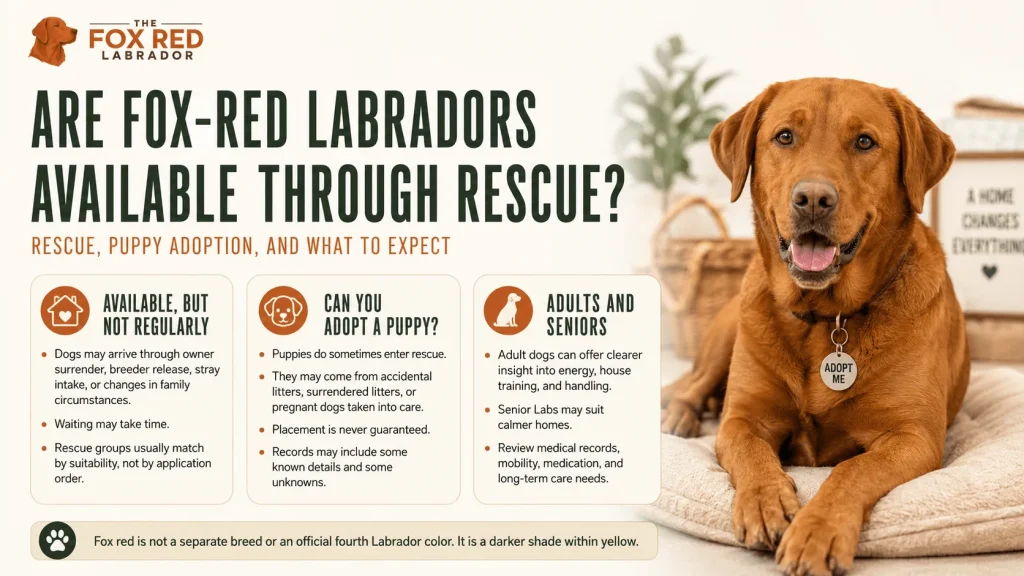
Yes, but it is not done on a regular basis. These dogs can come in from owner surrender, change of owners, stray, or breeder release, or due to a family’s inability to care for medical or behavioral needs.
A short request may mean a longer wait. Labrador Retriever Rescue of Florida cautions that individuals who specify a specific color, age, sex, or characteristic may have to wait weeks or months to receive a dog, and that dogs are “matched” by suitability not by the order in which they are applied for.
Can I Adopt A Fox-Red Labrador Puppy?
Puppies may end up in care in several ways, including accidental litters, pregnancy of a dog that was taken in, or by the surrender of the breeder. They tend to be noticed within a short period of time and placement is not ensured with application.
If records are not available, a shelter can make an educated guess about a puppy’s age and breed. What is recorded, what is observed, and what is still unknown.
What About Adult And Senior Red Labradors?
Adults can offer helpful insights on house training, energy, handling and other animal interactions. Their behaviour may still change as they get used to their new environment.
For homes that prefer a more relaxed tempo, Senior Labs can be a charming addition. Before making that commitment, it’s important to review medical records, mobility, medication, and continuing-care costs.
How Does The Labrador Rescue Adoption Process Work?

Most organisations have apps to learn more about the household, rather than give a prize to the first person to click. It may take a few days to get approval, and it may take a lot longer to find a compatible dog.
The normal lab rescue process is as follows:
- Find an organization serving your area.
- File an application for adoption.
- Provide landlord and veterinary information.
- Take part in an interview or home check.
- Introduce the dog to the appropriate members of the household.
- Introduce resident dogs as needed.
- Read medical records and contract.
- Pay the fee and the transfer is complete.
Some groups have an adoption event or online meeting prior to an in-person visit. Do not make a private side deal; stick to the organisation’s process.
What Are The Requirements To Adopt A Labrador?
Red Labrador adoption requirements typically include age, ID, household consent, landlord approval, and veterinary references. Applicants are also required to demonstrate that they have the capability to care for, train, exercise and provide medical treatment to the animals on a daily basis. Our Fox Red Labrador ownership guide explains the daily routines, household preparation, expenses and long-term responsibilities adopters should consider.
Fencing rules may depend on the individual dog. If an application is declined, it doesn’t necessarily mean that the person is a bad owner; it may just be the wrong Lab for that home.
How Do Labrador Rescue Organizations Match Dogs With Families?
Placement teams can make a comparison between the applicant’s circumstances and energy, health, handling comfort, prey drive, mobility and behavior around children or animals. The decision can be influenced by work hours, stairs, fencing, experience and time alone. Before applying, use our Is This Dog Right for You? checklist to assess your schedule, activity level, training capacity, shedding tolerance and budget.
While it is useful to hear what the temporary caregiver observes, it is not a promise. Your dog might behave differently after moving to a new home.
Should I Foster Before Adopting A Labrador?
A temporary-care situation may show you how a Labrador will behave in the normal household and give you room for another dog. Prior to acceptance, check who is responsible for paying approved expenses and who is making medical and placement decisions.
Don’t make it a “test drive” arrangement. It can be stressful for the dog to move again even if it is under the agreement.
How Much Does It Cost To Adopt A Red Labrador?
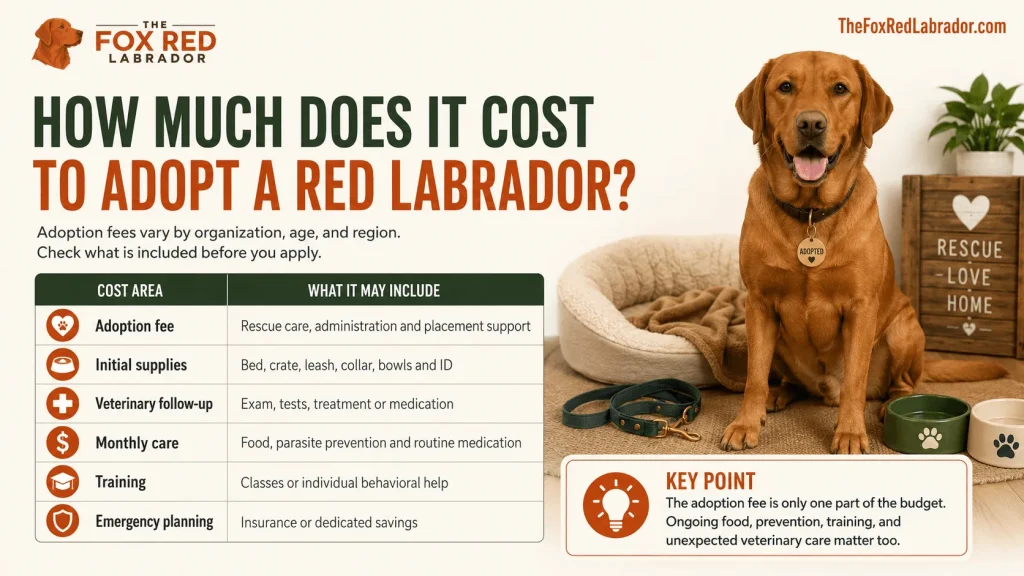
Charges are different from place to place, organization to organization and age to age. They may contribute towards transport and examination, vaccinations, sterilisation, microchipping, medication or treatment prior to placement.
The published amounts should not be viewed as a national average as one regional organisation may charge more or less than another. Verify the fee and what is covered in the care before making application.
| Cost area | What it may include |
|---|---|
| Adoption fee | Rescue care, administration and placement support |
| Initial supplies | Bed, crate, leash, collar, bowls and identification |
| Veterinary follow-up | Examination, tests, treatment or medication |
| Monthly care | Food, parasite prevention and routine medication |
| Training | Classes or individual behavioral help |
| Emergency planning | Insurance or dedicated savings |
The adoption fee is just one component of the budget. After the welcome-home picture, it’s food, prevention, training and unexpected veterinary care.
Are Rescued Red Labradors Good Family Dogs?
Many turn out to be family pets, but the shade of a coat doesn’t guarantee a home environment. It’s far more important to consider health, age, learned behavior, energy and comfort with people.
Inquire about the dog’s reaction to kids, guests, food, toys, handling, sound and other pets. Even a child-friendly Lab requires a gradual introduction with supervision.
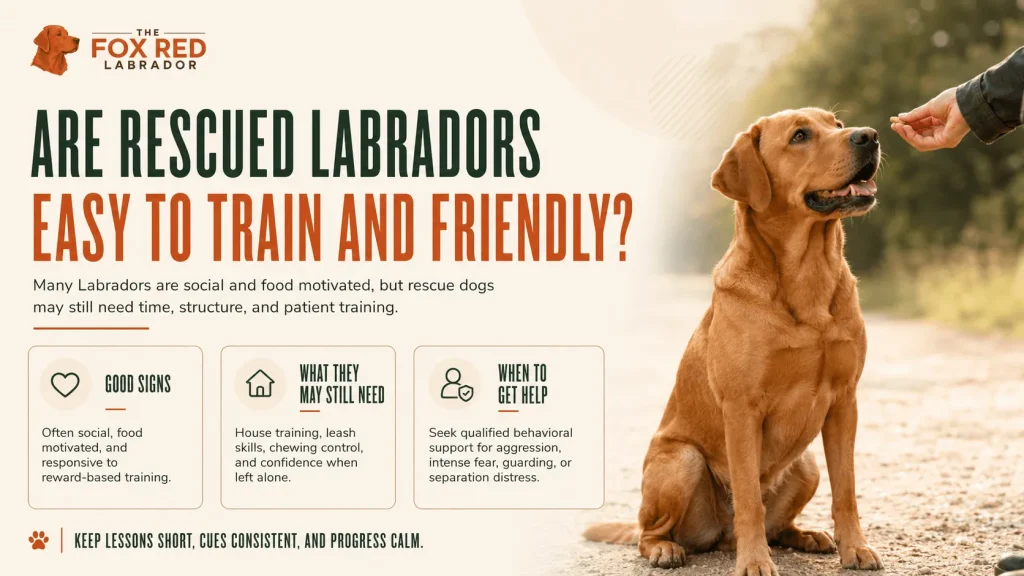
Are Rescued Labradors Easy To Train And Friendly?
Labradors are social and food-motivated, and reward-based training is usually possible. Even though your dog is crate trained, it may not be house trained, chew on objects, walk on a leash, be protective of others, be afraid of being left alone, or suffer from other issues.
Keep lessons short and have regular cues. When aggression, intense fear, guarding or separation distress emerges, it is wise to seek qualified behavioral assistance.
Is It Better To Rescue Or Buy A Red Labrador?
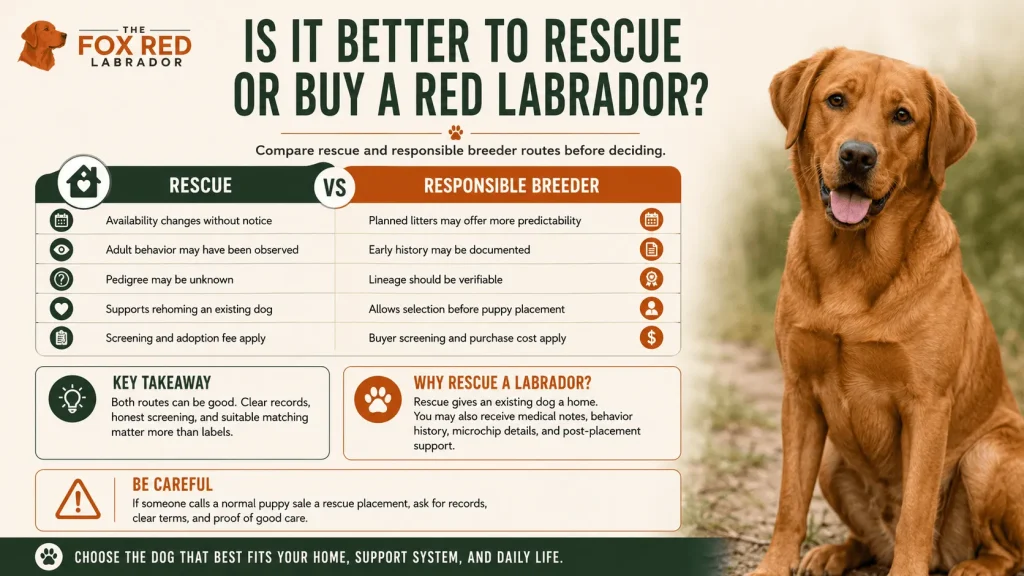
Adoption is a second chance for an existing dog and may offer observations from a home environment. Not all medical history, early experiences, and pedigree records are available.
A good breeder can give you documentation of ancestry, health testing and information from birth. There is screening, realistic expectations, and careful verification for both routes.
| Rescue | Responsible breeder |
|---|---|
| Availability changes without notice | Planned litters may offer more predictability |
| Adult behavior may have been observed | Early history may be documented |
| Pedigree may be unknown | Lineage should be verifiable |
| Supports rehoming an existing dog | Allows selection before puppy placement |
| Screening and adoption fee apply | Buyer screening and purchase cost apply |
If someone says that their normal puppy sale is a rescue placement, be careful. Labels are not a substitute for records, clear terms or good care.
Why Rescue A Labrador?
Rescue or adoption gives a dog a home when he or she needs one. You may also get medical information, behavioral notes, microchip information and post-placement assistance, depending on the facility.
Sometimes, an adult’s behavior is easier to see than a puppy’s temperament. However, there’s no one who can ensure a dog’s behavior after moving.
What Health Checks Do Rescued Labradors Receive?
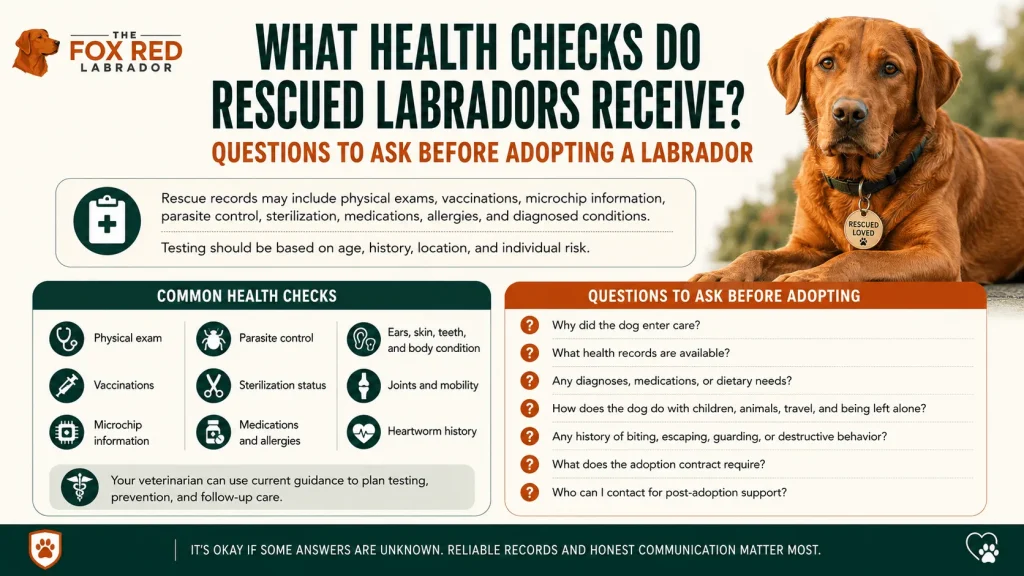
Records can include physical exams, vaccinations, microchip information, parasite control, sterilization, medications, allergies, and diagnosed conditions. Testing should be based on the dog’s age, history, location and personal risk.
If I’m looking at a newly adopted Labrador, I’m very aware of their ears, skin, teeth, body condition, joints, mobility, medication and changes since they’ve been taken in. Use of reliable records and individual risk should guide a decision on vaccination.
A history of heartworms is also important. Your veterinarian can use the current information from the American Heartworm Society to test, prevent and treat the specific dog.
What Questions Should I Ask Before Adopting A Labrador?
Good questions are not an interrogation! They will assist both parties in determining whether the placement is fair to the dog and home.
- History: What is the reason for the dog’s entry into care and what is the history that is documented?
- Health: Any diagnoses, medications, allergies, dietary needs or planned treatments?
- Behaviour: Does the dog get on well with children, animals, handling, food, toys, travel and being left alone?
- Safety: Do you know of any biting, escaping, guarding or destructive behavior?
- Policy: If the placement doesn’t happen, what is required in the contract?
- Support: Who is the adopter able to reach after the dog has been adopted?
It is ok to say that you don’t know. Confidence without records is more to be taken with a grain of salt.
How Can I Prepare My Home For A Rescued Labrador?
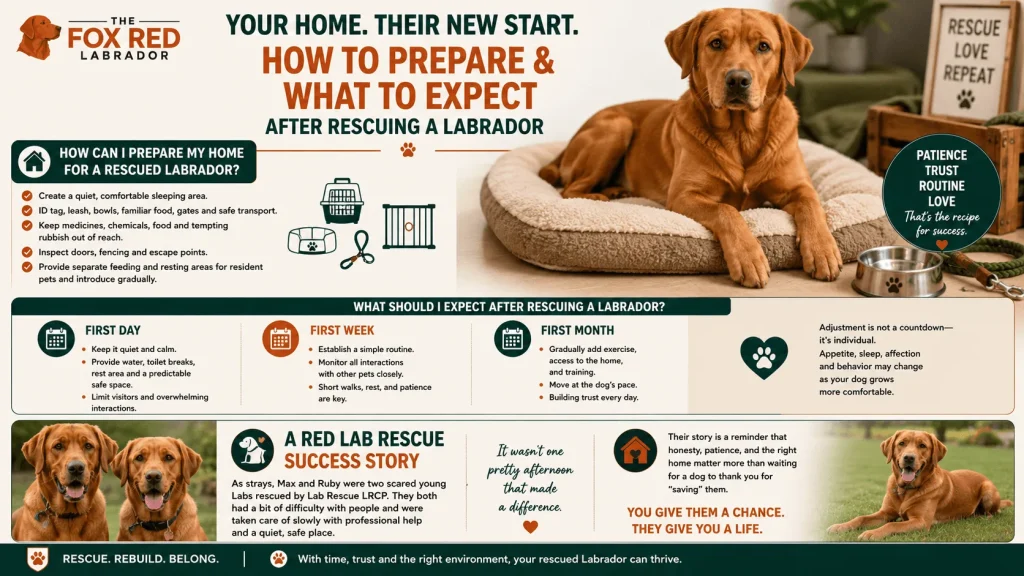
Make a quiet sleeping spot, identification tag, leash, bowls, familiar food, gates and safe transport. Keep medicines, chemicals, food and tempting rubbish out of the reach of a curious nose.
Inspect doors and fencing prior to arrival. Separate feeding and resting facilities should be provided for resident animals and introductions should be made gradually.
What Should I Expect After Rescuing A Labrador?
Spend the first day quietly. Do provide water, toilet facilities, rest facilities, and a predictable resting area – but don’t invite the whole neighborhood to come say hello.
In the first week, create a basic routine and closely monitor all interactions with animals. In the first month, gradually add exercise, access to the house, and training, at a speed that the dog can keep up with.
Adjustment is not a countdown; it is individual. The dog’s appetite, sleep patterns, affection and behavior can change as it gets more comfortable.
A Red Lab Rescue Success Story
As strays, Max and Ruby were two scared young Labs rescued by Lab Rescue LRCP. They both had a bit of difficulty with people and were taken care of slowly with professional assistance and a quiet place.
It wasn’t one pretty afternoon that made a difference. Their story is a reminder that it’s better to be honest, patient and put the dog in the right place than to wait for the dog to thank you for being saved.
How Do I Find A Reputable Labrador Rescue?
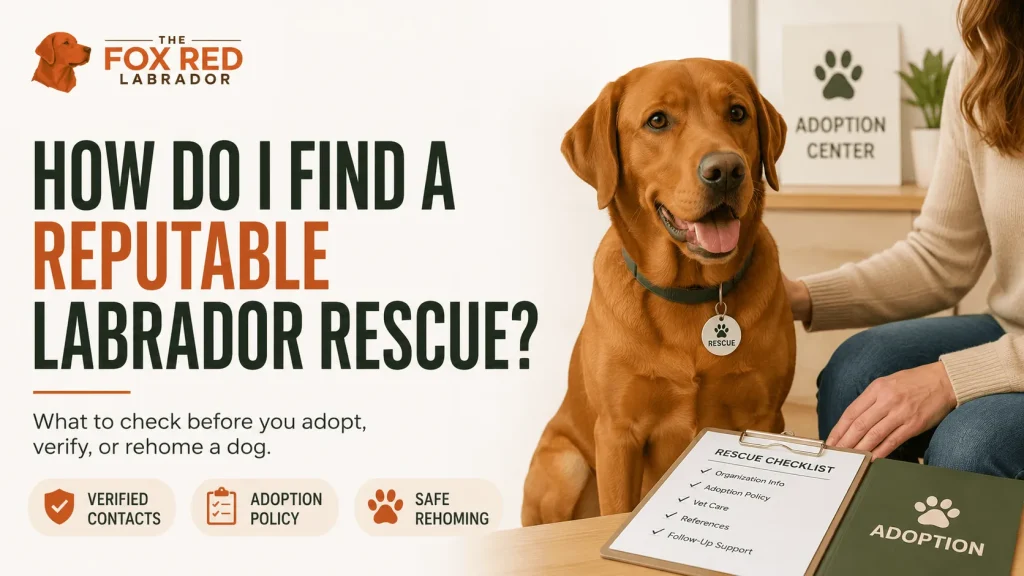
A good organization will have verifiable contact details, clear screening, medical disclosure, a written contract, and a return policy. Other ways to check are through state charity or animal-rescue registration, but it does not guarantee quality.
Look out for rare puppies, pressure to pay up-front, stolen photos, irrevocable payments, and shipping without screening. Take a time out if the story is urgent but the evidence is not.
How We Select And Verify Rescue Resources
Organizations listed here should have an official website, contact information should be visible, they should have a stated service area, and they should have an adoption policy or a listing route. Details are verified with original pages and a review date is provided.
Inclusion is free and does not mean that the dog will be available or that they will behave. Any corrections should be made via the contact page of the website.
If You Need To Rehome A Red Labrador
If there is a return agreement, then contact the original rescue or breeder first. Before contacting existing Labrador organizations, collect medical records, medication information and an honest behavior history.
Communicate bite, guarding, escape, and health issues clearly. Do not give the dog to an unknown person without screening or a written transfer.
Conclusion
Look for red, fox red, dark yellow and yellow Labradors. Check all organizations, ask questions and select based on health and compatibility and not color.
The dog that fits your lifestyle might not be the one you thought you’d envisioned. The better match may have some grey around the muzzle, and already know where the sofa is
FAQ’s
Yes, when the dog and household are considered compatible. New owners should be ready for training, exercise, shedding, medical costs, and an adjustment period.
Sometimes. Many organizations restrict placements because they require home checks, meetings, or local support, so confirm the service area before applying.
Some arrive with registration or pedigree records, while others do not. Coat shade and appearance cannot establish ancestry without documentation.
Reputable contracts commonly require the dog to be returned to the original organization. Ask about that process before signing and seek help early if serious problems arise.
Possibly, but many groups do not place dogs in application order. They usually compare approved homes and choose the closest match for each dog.
Approval can take days or several weeks. Waiting for a fox-red Lab may take longer when age, sex, distance, and household requirements narrow the available matches.
Yes, occasionally. Puppy intake is unpredictable, and suitable applications may arrive quickly after a listing appears.
Yes. Review mobility, medication, medical records, daily comfort, and continuing expenses so the home is prepared for the dog’s actual needs.
References
- Labrador Retriever Club Breed Standard — Labrador coat-color classification
- Lab Rescue LRCP — regional coverage, adoption resources, and documented rescue stories
- Labrador Retriever Rescue of Florida — matching policy and waiting-time expectations
- Labs4Rescue — Labrador adoption and senior-dog resources
- Golden Gate Labrador Retriever Rescue — regional adoption and senior-Lab information
- Petfinder Labrador Retriever Adoption — location-based adoption listings
- AAHA Canine Vaccination Guidelines — vaccination guidance
- American Heartworm Society Guidelines — heartworm testing, prevention, and management
- AVMA Microchipping FAQ — microchip registration after adoption